
If you’ve gotten a quote from an insulation contractor and something felt off — even if you couldn’t quite put your finger on what — you’re probably picking up on something real.
We hear this regularly. Someone calls us, a home performance contractor, after talking to an insulation company, and when we ask what prompted the second call, the answer is usually some version of “I don’t know, it just didn’t feel right.” That instinct is worth trusting. Here’s what it’s likely telling you.
There’s a Difference Between Buying Insulation and Solving a Problem
Insulation is a product. Home performance is a process.
When you call an insulation contractor, you’re essentially shopping in the commodity market — the same way you’d shop for a new water heater or a load of gravel. The goal is to get the product installed at the best price. There’s nothing wrong with that approach if insulation alone is genuinely what your home needs.
But most homes don’t just need insulation. They need someone to figure out why they’re uncomfortable, inefficient, or unhealthy — and then address the actual cause, not just the most obvious symptom. That’s a fundamentally different kind of work, and it requires a fundamentally different approach.
The One-Gun Problem and Why Your Home Needs a Holistic Approach to Home Performance
Every trade knows their thing. And every trade can only offer solutions in terms of their thing. If their thing can’t solve the problem, then as far as they’re concerned, there is no problem.
It’s a little like hunting with one specific gun. If you can’t kill it with that gun, you don’t eat — so problems that can’t be solved by whoever got called tend to get “sorta-solved” instead.
Two examples most Wisconsin homeowners will recognize:
Inconsistent temperatures. When part of your house is always too cold or too hot, the natural thought is: “What keeps my house comfortable? My heating and cooling system. So that must be the problem.” The HVAC company that gets the call sends a salesperson. The salesperson gets paid when they sell something HVAC-related. So, surprise surprise, something in your heating or cooling system needs to be replaced or upgraded. If they thought about it on a larger scale, they’d see the air leakage and insufficient insulation as the real problem — and recommend a different contractor entirely. But that doesn’t put food on their table, so it doesn’t come up.
Window condensation and drafts. The replacement window industry has done a remarkable job convincing homeowners that drafts, condensation, and high energy bills are caused by bad windows — and that replacing them will fix everything. We’ve been in homes where window replacement contracts left homeowners owing more than the work was worth, at interest rates that guaranteed years of payments — and the comfort problems were exactly the same when it was done. That’s not an accident. It’s what happens when the solution has to fit the product being sold.
A home performance contractor looks at all of the systems, identifies the actual causes, and guides homeowners toward the real solution — even when that solution isn’t something we sell.
It’s a large part of the reason we charge for a home energy audit. It allows us to give honest advice when our contracting services aren’t part of the answer.
What We Actually Do That Most Contractors Don’t
Here’s where the difference becomes concrete.
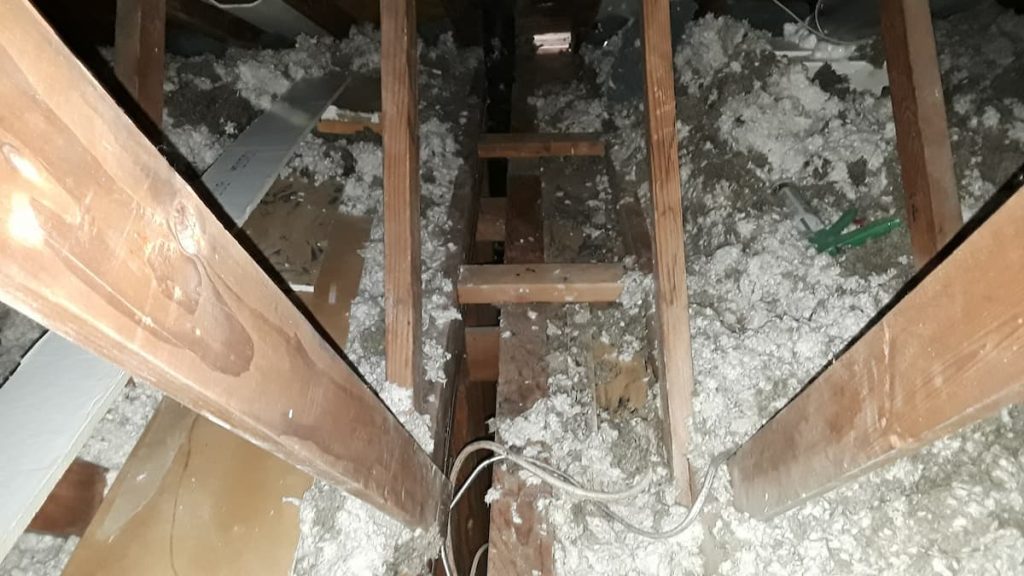
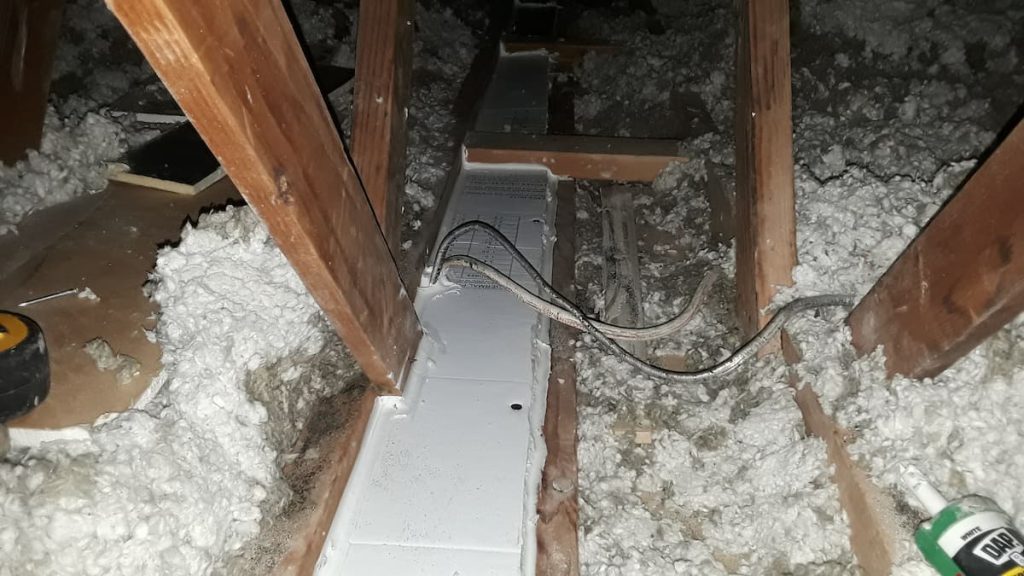
We thoroughly air seal the attic — all of it.
Most straight insulation contractors don’t air seal at all. Other home performance contractors in our market do some. We operate on the principle that if one section of a wall plate is leaking, the rest of it probably is too — so it may as well all get sealed. Partial air sealing is a little like patching half the holes in a boat and calling it fixed.
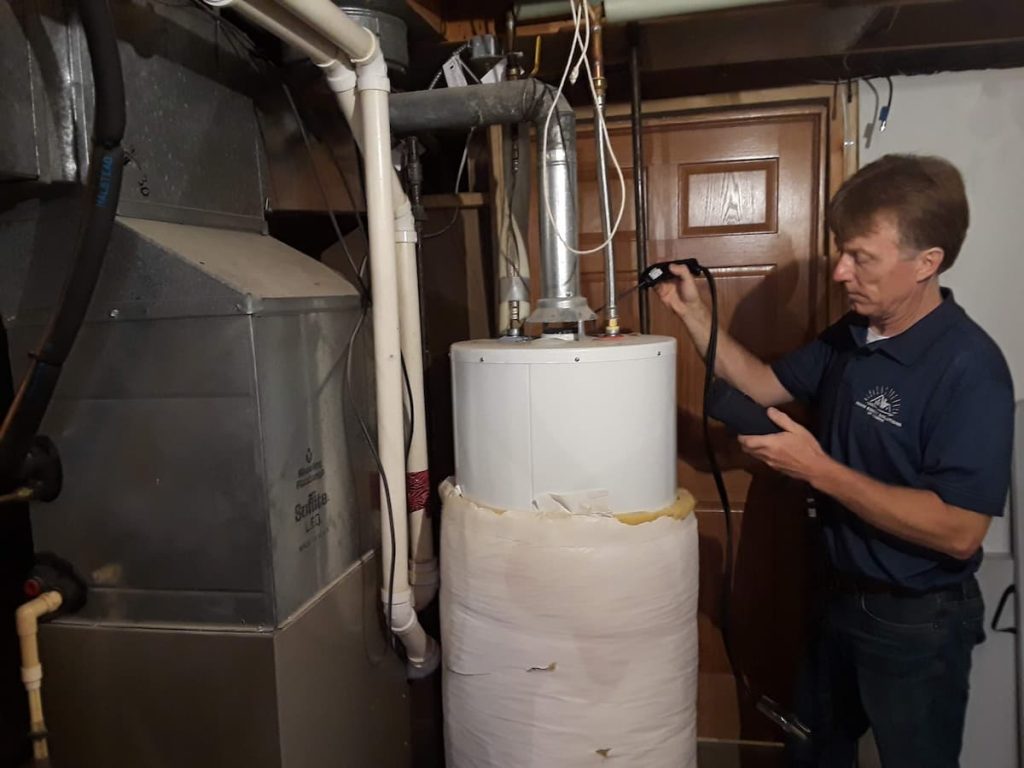
We audit every venting appliance in the home.
Furnaces, water heaters, bathroom exhaust fans, kitchen exhaust fans — we make sure they’re all exhausting properly before we add insulation. This matters because we regularly find bathroom and kitchen fans venting directly into the attic rather than outside the home. Once insulation is added, that becomes a significant moisture problem. We also find situations where a brick chimney has been dismantled to just below the roofline — which sounds fine until you realize it leaves a direct air pathway from the basement all the way to the attic. Some of the moisture damage photos in our earlier post came from exactly that situation.
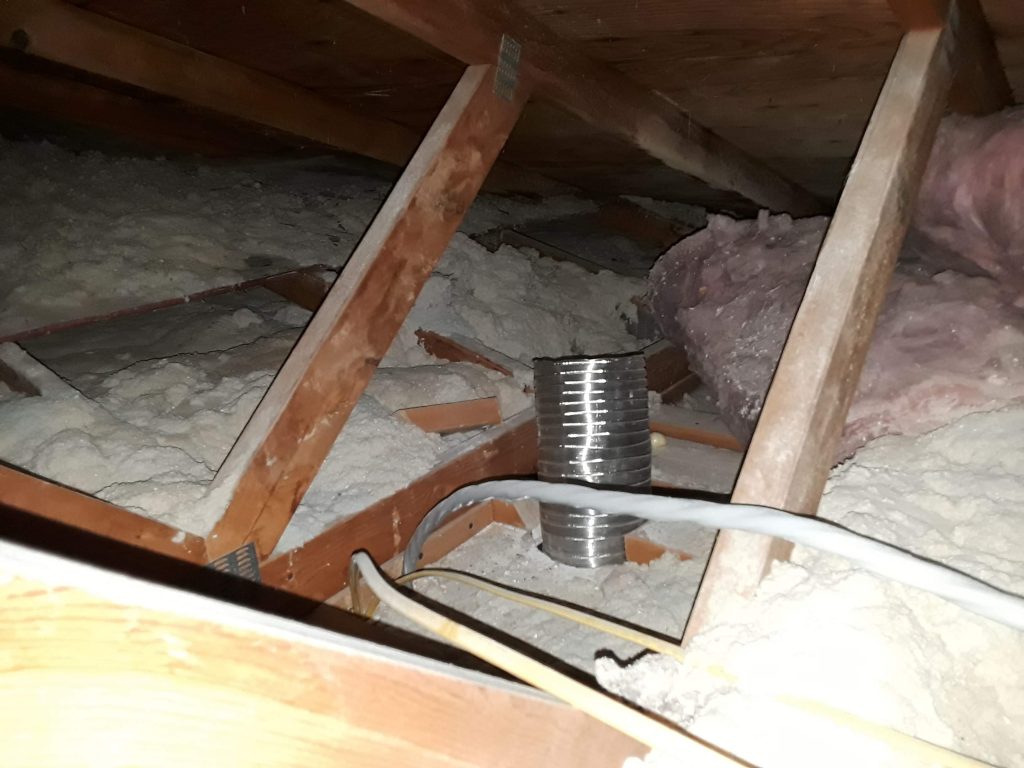
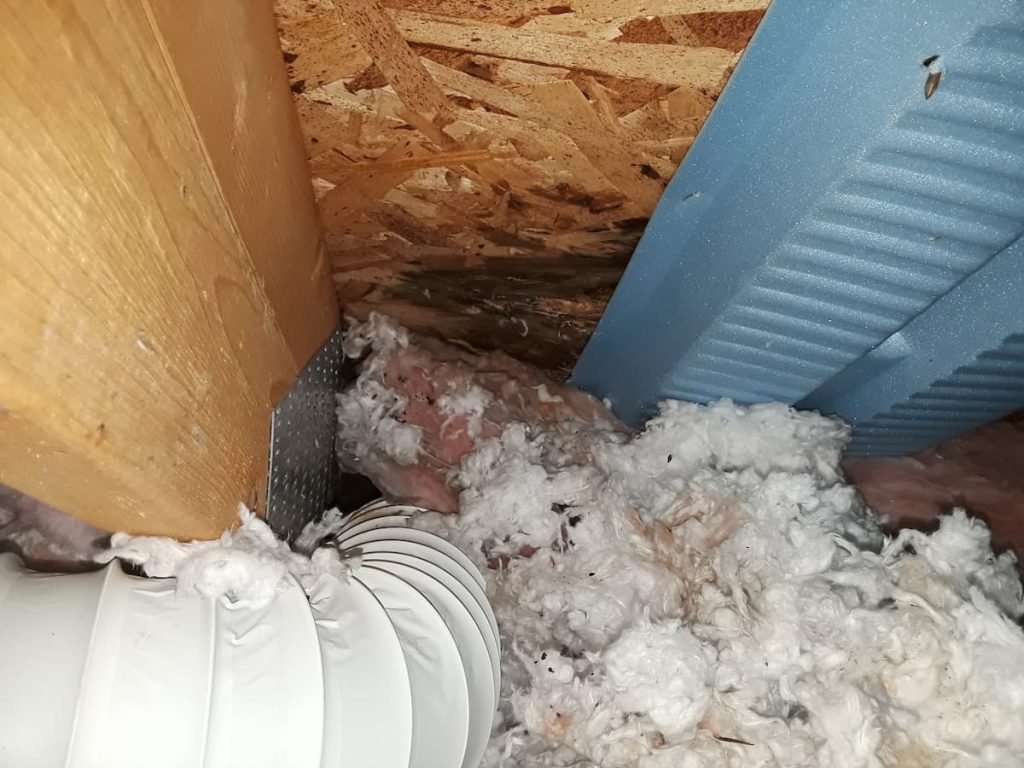
We check attic ventilation.
Proper attic ventilation requires intake air at the soffits and exhaust at the ridge. We regularly find homes where vented soffit panels were installed directly over the original solid panels — which means no air is actually getting in, regardless of what it looks like from the ground. That leads to moisture buildup in the attic over time.
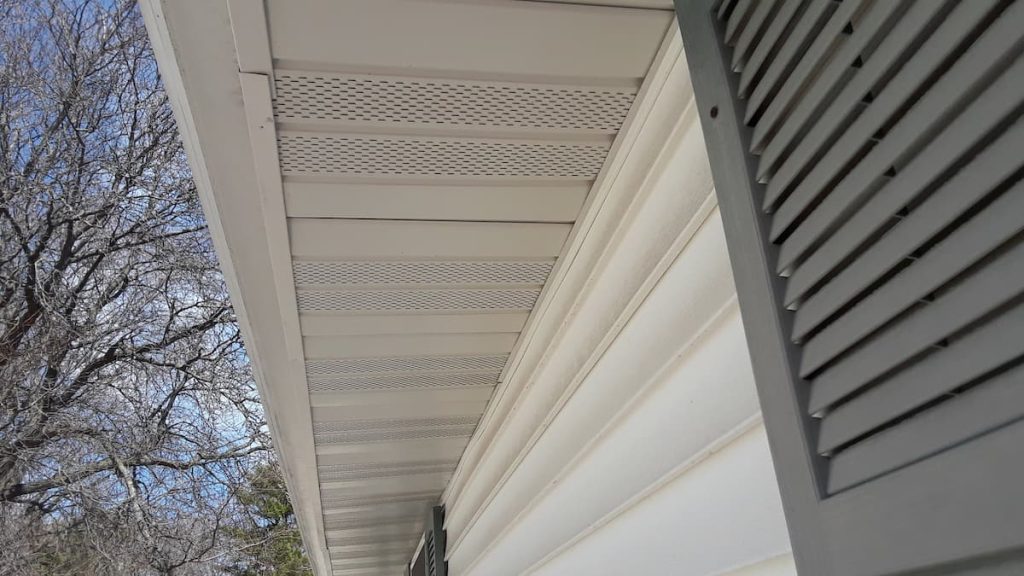
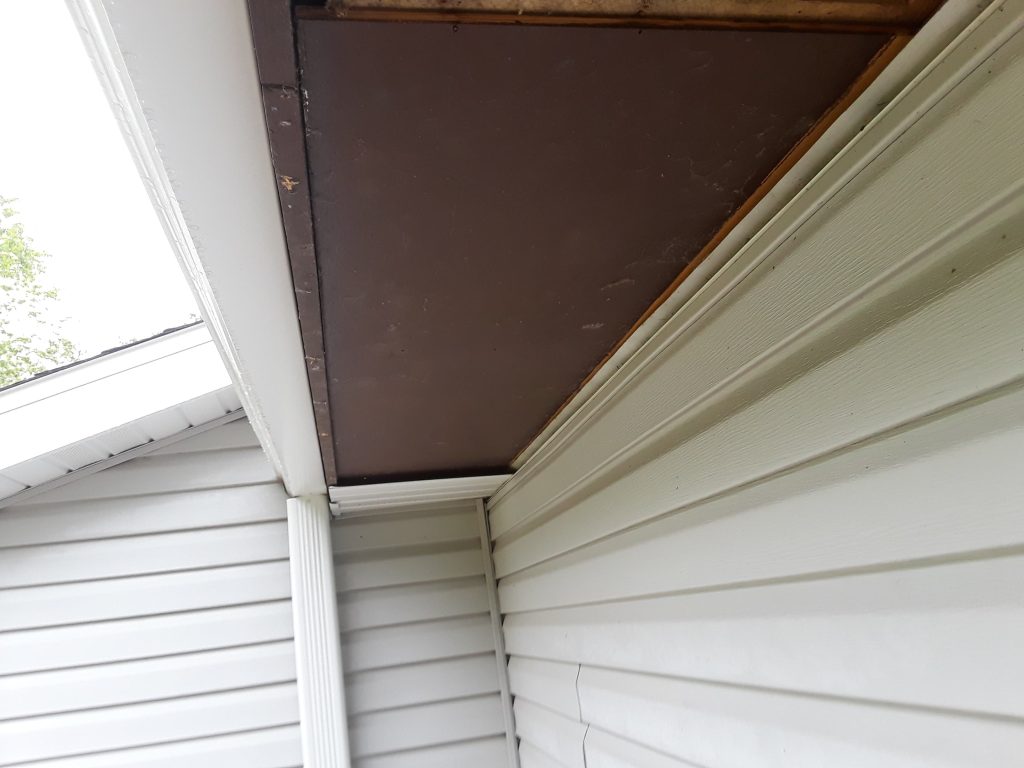
We don’t skip the hard parts.
In the basement sill area, there’s a section that frequently gets missed or omitted by other contractors — not because it’s complicated, but because it’s not easy to access and takes extra time. We do it anyway. Similarly, kneewalls are sometimes sealed using a shortcut that technically follows the intent of building codes, but can still leak air. We seal those gaps.
The Accountability Question
We’re currently the only home performance and insulation contractor in northeast Wisconsin with a BPI certified Building Analyst on staff.
That matters for a specific reason that isn’t always obvious. When the person identifying the problems and the people solving them aren’t part of the same organization, there’s a real risk that the recommended work won’t get done the way it should. The contractor’s crew takes direction from their boss, not from the analyst who wrote the assessment. There’s no enforcement mechanism — and no one person who’s accountable for the gap between what was recommended and what actually got done.
There’s also a less discussed issue in the industry: when an independent analyst sends a homeowner’s assessment out to multiple contractors for quotes, the contractor who offers the analyst the highest finder’s fee is often the one whose quote gets shown to the homeowner. The homeowner believes they’re getting an objective recommendation. They’re frequently not.
Our model closes that loop. The same person who diagnoses your home is accountable for the quality of the work that gets done to it. When something isn’t right, there’s immediate feedback to the person responsible — and an immediate requirement to fix it.
Additionally, every new employee at Home Energy Solutions earns their Building Performance Institute Building Science Principles certificate before they’re allowed to work in a customer’s home. The standard isn’t just about credentials on paper — it’s built into how we bring every person onto our team. We’re actively pursuing additional certifications as our industry continues to evolve.
What This Means for Your Comfort
About 30% of our work involves going behind another contractor’s work, correcting their mistakes. Some of that is genuinely bad workmanship. Much of it is simply that building science has evolved — we didn’t know then what we know now, and work that met the standard of its time doesn’t meet today’s understanding of how homes actually perform.
What we find most often: air sealing that wasn’t done at all, or was done half-heartedly. Insulation installed incorrectly, leaving sections of the attic under-insulated or uninsulated entirely. Kneewalls sealed with shortcuts. Basement sill areas skipped because they’re inconvenient.
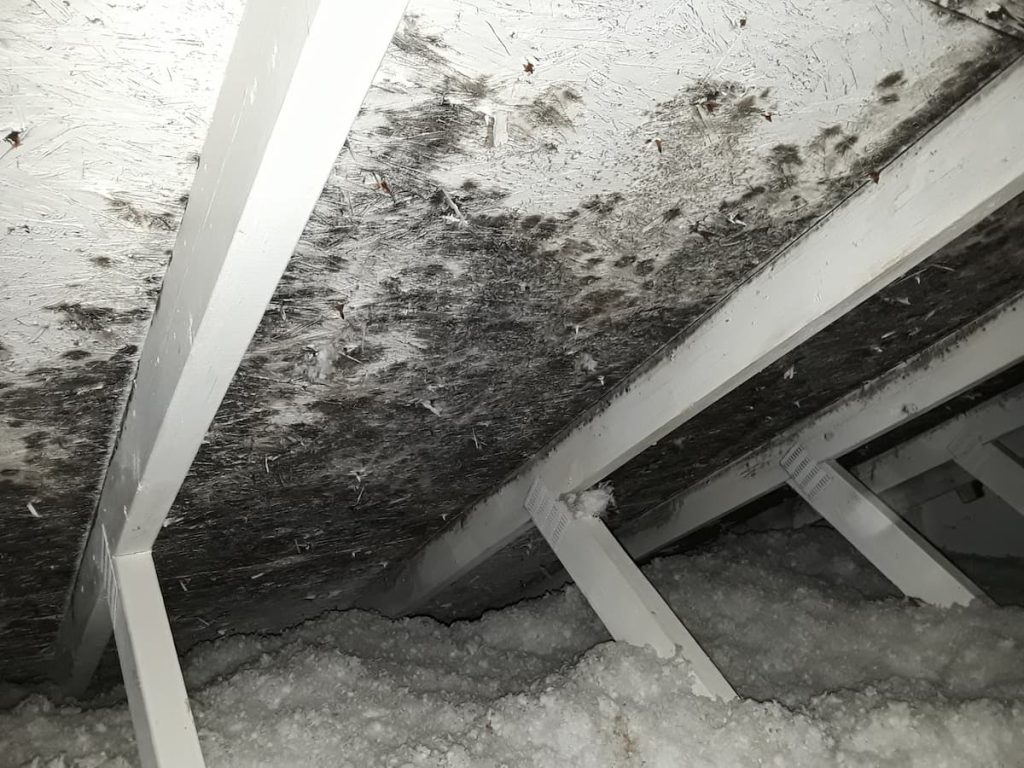
The result in every case is the same: a home that’s less comfortable, less efficient, and in some cases less healthy than it should be — and a homeowner who was told the job was done.
Home performance looks at how all of the components of a house work together. Not just the insulation. Not just the HVAC. Not just the windows. All of it — because comfort, efficiency, health, and safety aren’t separate problems. They’re the same problem, looked at from different angles.
That’s what a home performance contractor does. And it’s why, when something feels off about the other quote, it usually is.
Contact us here or fill out our estimate request form to start the conversation. We’ll walk through your home with you, tell you what we see, and give you an honest picture of what it needs — whether or not we’re the ones who can take care of it.

- Is the Air in Your Home Making You Sick? What Indoor Air Quality Really Means - April 30, 2026
- How Do Focus on Energy Rebates Work — and Do You Qualify? - April 26, 2026
- Why Are My Windows Wet — and Will New Windows Fix It? - April 16, 2026