
If you’ve got a cold room in your house every winter — a bedroom that never warms up, an upstairs that feels like a different house than your main floor, or a room that’s stuffy and hot every summer — you’re not imagining it, and it’s not just the way your house is built. It’s one of the most common complaints we hear from Wisconsin homeowners, and it almost always has a real, fixable cause.
Here’s the thing most people don’t know: that cold room in winter is almost certainly the same room that’s too warm in summer. Same problem, opposite season.
Why the Same Room Is Uncomfortable Year-Round
Buildings in cold climates like Wisconsin are constantly trying to find balance. In winter, heat inside your home moves toward the cold outdoors. In summer, heat outside moves toward your cooler interior. This happens two ways, and understanding both is the key to understanding why one room keeps giving you trouble.
The first is conduction — heat passing through solid materials. Picture a cold glass of ice water. Even before you touch it, you can feel the cold near your hand. What’s happening is the warmth from your body is traveling through the air, through the glass, and into the ice, because heat always moves from warm to cold. Your walls, ceiling, and floors do the same thing — slowly conducting heat in whatever direction the temperature difference pushes it.
The second — and more important — way is convection. Air is a gas, and gases move from areas of high concentration to low concentration, always looking for balance. Think about pouring that glass of water onto a flat surface. It doesn’t stay in a column — it spreads out immediately in every direction. Warm air inside your home behaves exactly the same way, constantly pushing outward through any gap or opening it can find.
Convection is typically the bigger culprit in comfort problems. And the gaps it moves through are almost never where you’d think to look.
What People Usually Think — and What’s Actually Happening
When one room is cold, most homeowners assume it’s a heating system problem. Maybe the furnace isn’t powerful enough, or the duct run to that room is too long, or the room is just too far from the source. Those are reasonable guesses, but they’re usually wrong.
What’s more likely happening is that the heated air is getting to that room — it’s just leaving before it can do its job. Warm air finds the gaps and cracks in that space and moves toward the cold outdoors, taking the heat with it before it ever warms the room up. Your furnace runs longer trying to compensate, your energy bill goes up, and the room stays cold.
Where the Air Is Actually Going
This is where it gets surprising. The gaps that matter most aren’t usually at windows or doors — those are the obvious ones homeowners already think about. The real culprits are the ones you can’t see without the right tools.
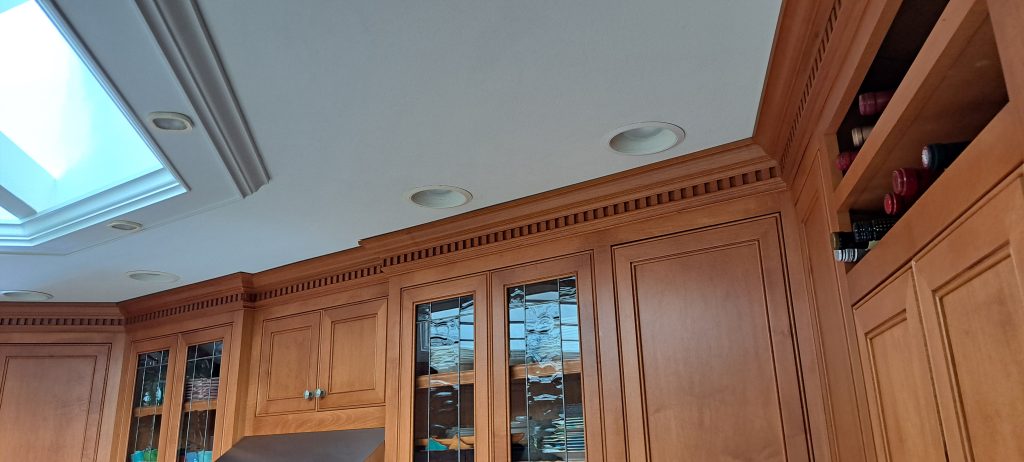
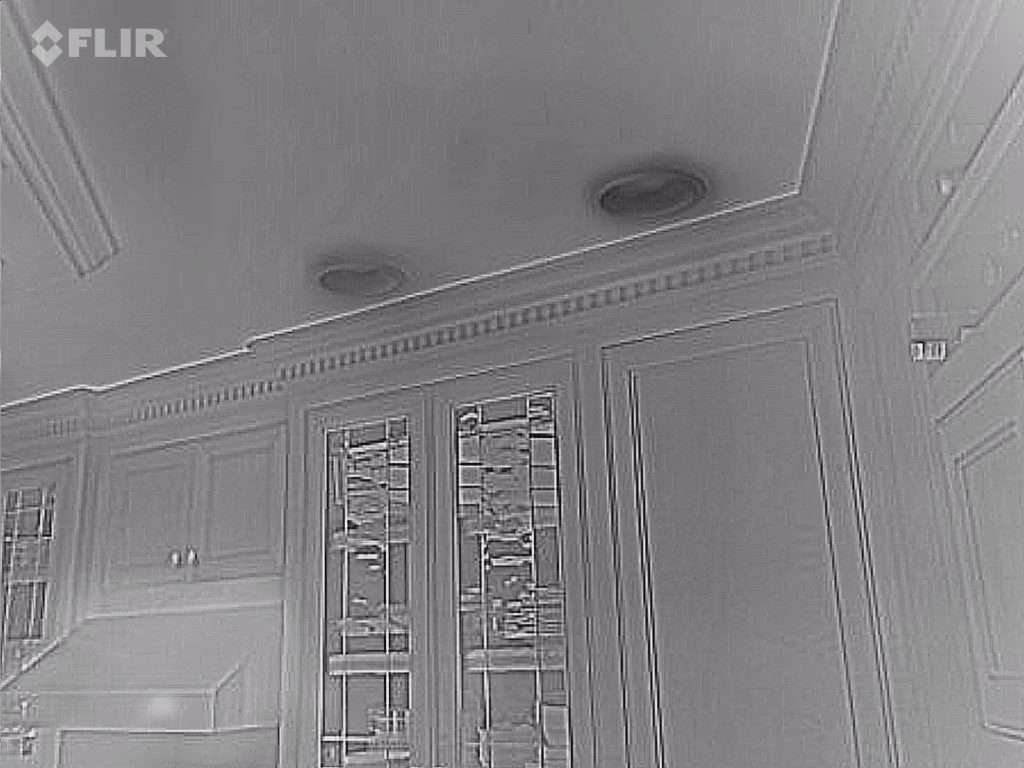
Recessed light fixtures — the kind installed in millions of Wisconsin homes built from the 1980s onward — are essentially open holes between your living space and your attic. Each one is a small gap, but a room with eight or ten of them adds up quickly.
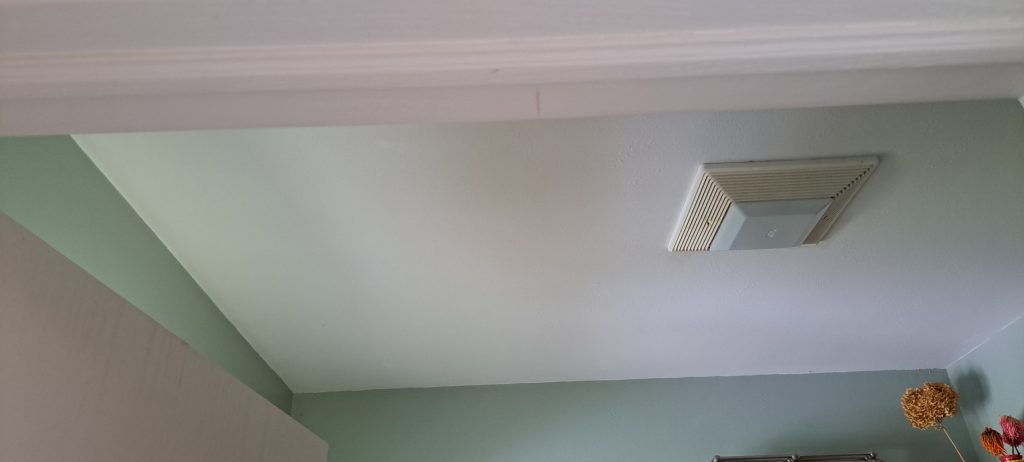
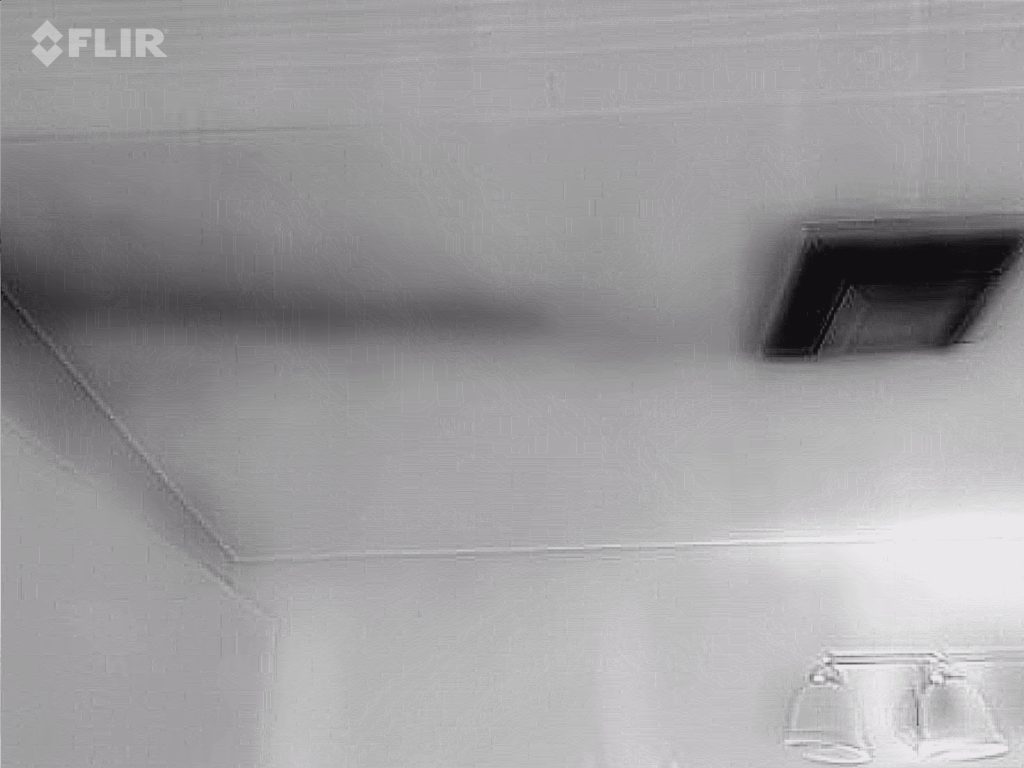
Bathroom exhaust fans are another common problem area. The fan itself may work fine, but the housing around it is often unsealed, creating a direct pathway between your bathroom ceiling and the cold attic above.
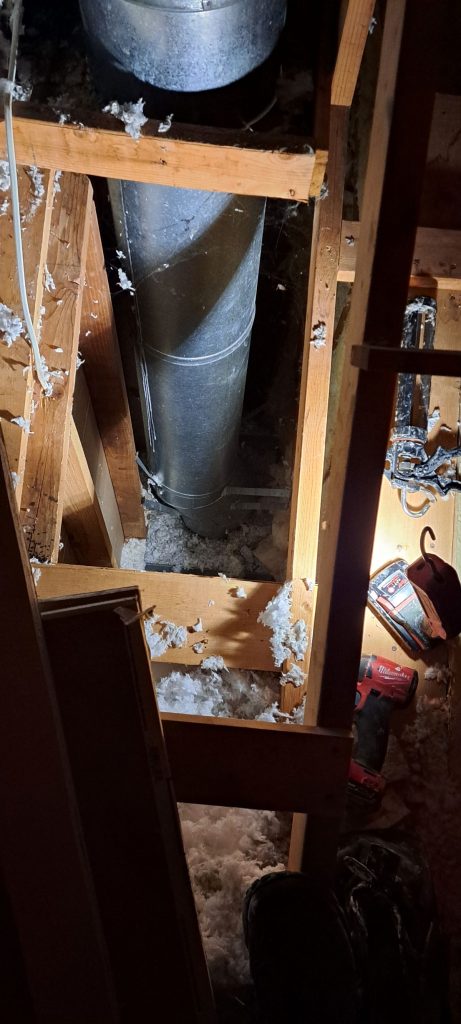
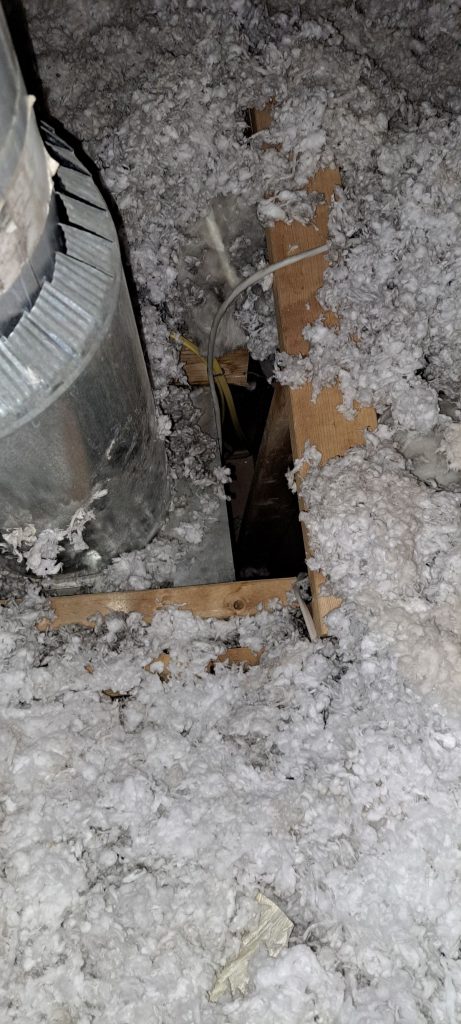
Fireplace chases, the framing cavities behind linen closets, gaps around plumbing and electrical penetrations — these are what building science people call “bypasses.” They’re open pathways that connect your living space directly to your attic. Warm air finds them immediately, because that’s what warm air does.
Why Insulation Alone Doesn’t Fix It
This is the part that surprises most homeowners. Insulation slows conductive heat loss — it makes a real difference. But it does almost nothing to stop air movement. Blown-in insulation sits in your attic like a blanket of material, but air moves right through it and around it.
Adding insulation without first air sealing those bypasses and penetrations can actually make the moisture situation in your attic worse. When warm, humid air from your living space gets into a better-insulated — and therefore colder — attic, it reaches the temperature at which it drops its moisture sooner. We know this happens because we’ve seen it firsthand. When we get into attics in homes that had insulation added without air sealing, moisture damage is one of the most common things we find — sometimes years after the original work was done.
The right sequence is always air sealing first, insulation second.
How We Find the Problem
We use a blower door test to measure exactly how much air your home is losing and depressurize the house so air movement becomes detectable. The blower door test is a Building Performance Institute standard used by certified home performance contractors across the country. Combined with an infrared camera — which is what produced the images above — we can find the specific locations where air is moving and address them directly.
The result isn’t just a more comfortable room. It’s a home that holds its temperature better, costs less to heat and cool, and handles Wisconsin winters the way it should.
If you’ve got a room that’s been giving you trouble, we’d be glad to take a look. Contact us or fill out our estimate request form and we’ll get the conversation started.

- Is the Air in Your Home Making You Sick? What Indoor Air Quality Really Means - April 30, 2026
- How Do Focus on Energy Rebates Work — and Do You Qualify? - April 26, 2026
- Why Are My Windows Wet — and Will New Windows Fix It? - April 16, 2026